Does This China Class II Shipment Need a UDI YetAn incoming-inspection and regulatory-clock guide for international distributors, OEM/private-label buyers, and hospital procurement leads evaluating Chinese Class II sterile device shipments, Announcement 21 remaining-variety deadlines, the 103 third-batch catalogue, and Announcement 15 exemptions on 18 September 2026.
REGULATORY GUIDES
Market-entry requirements, made decision-ready.
Jurisdiction-specific guidance on classification, registration, labeling, UDI, evidence packs and compliance boundaries.
How to Place a Medical Device on the Mexican Market in 2026: Registro Sanitario versus 2010 FDA/Canada and 2012 Japan Equivalence Agreements versus Option F Abbreviated Pathway under the 18 July 2025 Lineamientos, IMDRF Management Committee versus MDSAP for GMP Certificates Only, Homoclave COFEPRIS-04-050 Still Physical, the 20 August 2026 Visor, Official LFD Article 195-A Fees, and Why CE / 510(k) / NMPA / MDSAP Do Not Replace a Mexican Sanitary RegistrationAn operational regulatory guide for international medical device distributors, OEM buyers, and foreign manufacturers placing sterile single-use devices on the Mexican market under Ley General de Salud Articles 262 and 376, RIS Article 83 risk classes, the 2010 FDA/Canada and 2012 Japan equivalence agreements, and the 18 July 2025 Option F abbreviated pathway.
How to Place a Medical Device on the Japanese Market in 2026: Marketing Authorization Holder versus Designated MAH under PMD Act Articles 23-2 and 23-2-17, Foreign Manufacturer Registration under Article 23-2-4 versus Drug Accreditation, Todokede versus Ninsho versus Shonin, Ordinance 169 and MDSAP, Official Yen Fees, and Why CE / 510(k) / NMPA / HSA Do Not Replace a Japanese LicenceAn operational regulatory guide for international medical device distributors, OEM buyers, and foreign manufacturers placing sterile single-use devices on the Japanese market under PMD Act Articles 23-2, 23-2-4, and 23-2-17, MHLW Ordinance 169, and official PMDA user-fee schedules.
How to Place a Medical Device on the Korean Market in 2026: Import Business Permission versus Item Notification, Certification or Approval, KGMP and QMS Conformity Recognition after Act No. 21263, Official Fees under Enforcement Rule Article 65, and Why CE / 510(k) / NMPA / HSA Do Not Replace an MFDS LicenceAn operational regulatory guide for international medical device distributors, OEM buyers and manufacturers placing sterile single-use devices on the Republic of Korea market under the Medical Devices Act, Enforcement Rule Article 65 fees, and Act No. 21263 QMS conformity rules.
How to Place a Medical Device on the Singapore Market in 2026: SMDR versus Class A Notification versus Dealer Licence versus Registrant, GN-15 R13 Evaluation Routes and Malaysia MDA Reliance, Official Fees as of 26 March 2026, and Why CE / 510(k) / NMPA Do Not Replace an HSA ListingA definitive, decision-led guide for international manufacturers and Singapore distributors: navigating Singapore Health Sciences Authority (HSA) medical device registration, SMDR listings, Class A SHARE notifications, Registrant mandates, dealer licences, GN-15 R13 evaluation pathways, and 2026 fee cards.
How to Place a Medical Device on the Canadian Market in 2026: Medical Device Licence versus Medical Device Establishment Licence versus Class I, MDSAP as a Licence Condition not a Substitute, Official Fees as of 1 April 2026, and Why SOR/2026-110's Coming-into-Force Date Is Counted from Registration not from the MDCP BulletinAn operational decision guide for international medical-device distributors, private-label/OEM buyers, and overseas manufacturers: navigating Health Canada Medical Device Licences (MDL) under SOR/98-282 s 26, Medical Device Establishment Licences (MDEL) under GUI-0016 Table 1, the mandatory MDSAP quality filing condition, Schedule 1 risk classification, official 1 April 2026 fees including the private-label MDL, MDALL versus MDEL listing verification boundaries, and the SOR/2026-110 modernization coming-into-force timeline.
How to Place a Medical Device on the Australian Market in 2026: ARTG Inclusion versus Australian Sponsor versus Manufacturer Evidence, TGA Classification, Comparable Overseas Regulator Evidence, and Why 1 July 2026 UDI Starts Only After You Know the TGA ClassAn operational decision guide for international distributors, private-label/OEM buyers, and overseas manufacturers: navigating Australian Register of Therapeutic Goods (ARTG) inclusion under the Therapeutic Goods Act 1989, the Australian sponsor mandate, Manufacturer Evidence pre-approval, TGA risk classification (Classes I, IIa, IIb, III), Comparable Overseas Regulator (COR) pathways, July 2026 fee schedules, and the class-phased 1 July 2026 Unique Device Identification (AusUDID) rollout.
How to Place a Medical Device on the Saudi Market in 2026: MDMA versus Authorized Representative versus Establishment License, SFDA Classes A–D, 2025 Fees, and the May 2026 Bundling RulesAn operational decision guide for international distributors, private-label/OEM buyers, and overseas manufacturers: navigating the Kingdom of Saudi Arabia's MDMA requirements under Law M/54, the Technical File Assessment route, SFDA Classes A–D (MDS-G008), the May 2025 fee schedule, the 3 May 2026 bundling criteria (MDS-G028), Authorized Representative mandates, importer establishment licensing, and port-clearance verification.

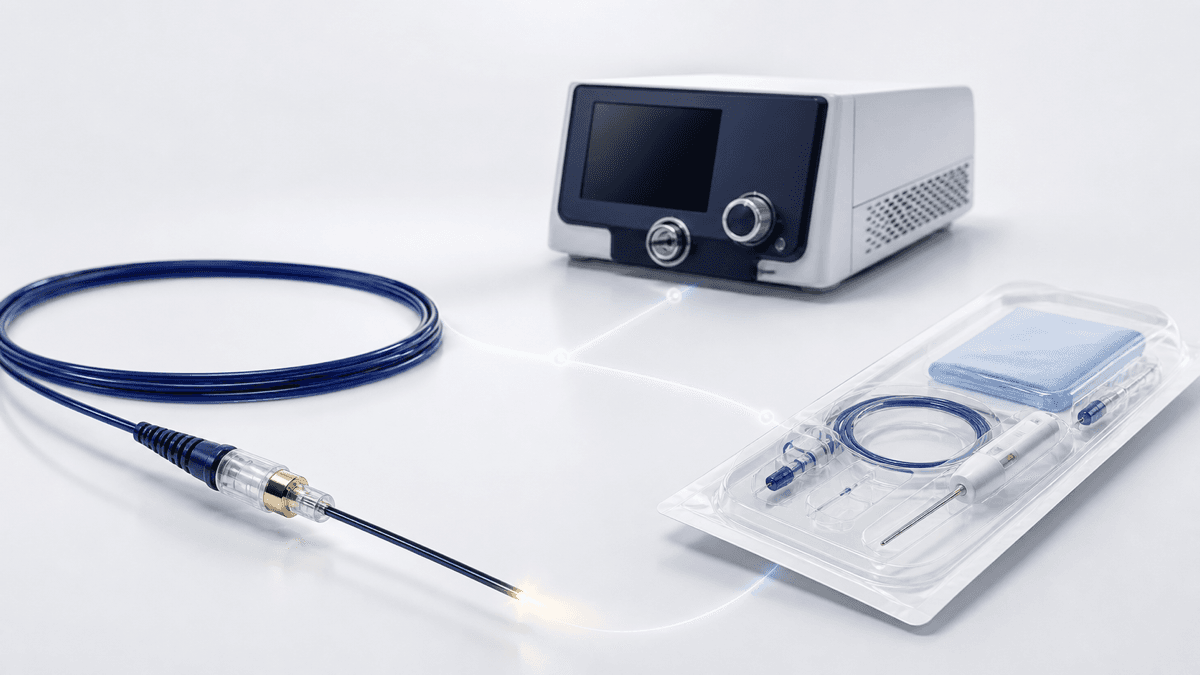
Which Part Is the Device? How Public Registers Separate Endovenous Laser Fibers, Generators and Kits (2026)Buyers say ‘the laser.’ Certificates name a fiber, a generator, or a vague system.
How to Place a Medical Device on the Great Britain Market in 2026: When a Valid CE Mark Is Enough, When UKCA Is Required, Appointing a UK Responsible Person, MHRA Registration, and the June 2025 PMS Rules That Already ApplyAn operational decision guide for international distributors, OEM buyers, and non-UK manufacturers: navigating Great Britain's CE-recognition timelines (2028 vs 2030), UKCA requirements under UK MDR 2002, UK Responsible Person mandates, DORS registration and 2026 fees, Northern Ireland EUDAMED rules, and the in-force June 2025 post-market surveillance obligations.
How to Verify a Certificate of Free Sale for a Medical Device: A Distributor's Guide to CFS and Export Certificates, Checking Issuing Authorities (FDA, EU, UK MHRA, NMPA) and Spotting Red FlagsA practical field-by-field verification guide for medical device export certificates: authenticating FDA CFGs via FECV, validating EU MDR Article 60 certificates, checking UK MHRA free-sale documents, navigating China's May 2026 export certificate reforms, and matching scope to your RFQ.
How to Verify an ISO 13485 Certificate: A Distributor's Guide to Reading QMS Certificate Scope, Checking Certification-Body Accreditation, and Telling a Real Certificate From a Fake OneA practical field-by-field certificate reading guide, scope-to-SKU matching table, IAF CertSearch and accreditation-body verification workflow, 2026 Global ACI transition decoder, fake/mill certificate triage, and distribution agreement evidence schedule.
How to Verify an FDA 510(k) Clearance: A Distributor's Guide to Checking a K Number, Reading the Clearance Record, and Telling Clearance, Registration and Listing ApartA practical five-check verification workflow, five-field matching grid, registration-versus-clearance decoder, exempt-device exception rules, and agreement evidence schedule for international medical-device distributors.
How to Verify a CE Certificate for a Medical Device: A Distributor's Guide to Reading Notified-Body Certificates, NANDO Designation, Scope and Extended MDD ValidityA practical five-check verification workflow, Annex XII reading grid, NANDO designation guide, EUDAMED status decoder, and distribution-agreement schedule for international distributors qualifying European medical-device suppliers.
Registering and Distributing Disposable Circumcision Devices: A US (FDA 510(k)), EU (MDR) and China (NMPA) Market-Entry Evidence Pack for Distributors and Private-Label BuyersA multi-jurisdiction regulatory matrix and distributor evidence checklist comparing US 21 CFR 884.4530, EU MDR Class IIa Rule 6, China provincial Class II NMPA registrations, and WHO prequalification gates.
How to Verify a Chinese Medical Device Registration: A Distributor's Guide to Reading an NMPA Certificate Number, Checking Validity, Scope and CancellationsA practical five-check verification workflow, certificate-number decoder, public database guide, and distribution-agreement evidence schedule for international distributors qualifying Chinese medical-device suppliers.

How Sterile Procedure Kits Are Regulated: FDA Convenience-Kit Rules, EU MDR Article 22, and the Evidence Pack an Assembler, Distributor, or OEM Buyer Must VerifyA definitive regulatory pathway, post-market recall analysis, and supplier-qualification checklist for multi-component sterile procedure trays, circumcision kits, puncture sets, and dressing packs.
Silicone Scar Gel Classification and Claim Substantiation: A US (FDA), EU and China (NMPA) Decision Matrix for Distributors and OEM BuyersQualifying a silicone scar gel or sheeting product for international markets requires navigating strict claim-by-claim classification rules across the US (FDA Class I under 21 CFR 878.4025), Europe (EU MDR Class I device vs Cosmetic Regulation boundary), and China (NMPA Class II medical device filing)—where permitted intended-use language, Cochrane evidence certainty, and ISO 10993 biocompatibility requirements set the boundary between compliant commercialization and regulatory rejection.
Design Transfer and Change Control for Medical Devices: A QMSR / ISO 13485 Handover and Change-Classification Checklist for Legal Manufacturers and Contract ManufacturersA practical regulatory checklist for legal manufacturers, OEM brand owners, and contract manufacturers executing design transfer and classifying post-market changes under FDA QMSR, ISO 13485, EU MDR, and NMPA.
Registering and Distributing a Single-Use Endovenous Laser Fiber: A US (FDA 510(k)), EU (MDR) and China (NMPA) Registration and Market-Entry Evidence PackA market-entry regulatory guide for medical device distributors and regulatory leads preparing US FDA 510(k), EU MDR Class IIb, and China NMPA registration evidence packs for single-use 1470 nm medical laser fibers.
Hypochlorous Acid (HOCl) Disinfectant Classification: A US, EU and China Regulatory Decision Matrix for Medical-Device and Hygiene-Product BuyersProcuring hypochlorous acid (HOCl) disinfectants internationally requires recognizing that regulatory classification is governed by intended-use claims, concentration, and application site rather than chemical identity—navigating the US EPA pesticide vs FDA liquid sterilant split under PRN 98-2, ECHA Biocidal Products Regulation (BPR) active substance rules in Europe, and China's weixiaozheng hygiene licensing system.
Unique Device Identification (UDI) for Private-Label and OEM Single-Use Medical Devices: A US (FDA), EU (MDR/EUDAMED) and China (NMPA) Decision MatrixDetermining who holds the UDI-DI, which issuing agency to use, and when database submission becomes mandatory under 21 CFR 830, EU MDR Article 27, and NMPA UDI Rules.
The Line That Decides the Class: How a Wound Dressing's Claim — Not Its Chemistry — Sets Its Regulatory Class in the US, EU and ChinaIn wound and skin care the label claim, not the material, sets the regulatory class — and because most of the category is 510(k)-exempt in the United States, the public clearance record systematically under-describes who actually supplies it. A primary-source read of 31 FDA product codes, EU MDR Rule 4 and NMPA's 2022 catalogue change.